


Calcium D-glucurate
Calcium D-Glucurate is the supplements I hear A LOT of people talk about! But I usually hear people asking '' What even is Calcium D-Glucurate? What does it do and WHY does it help certain people with Gilberts Syndrome!'' well today you shall find out my very good friend!
SUPPLEMENTS
10/4/20254 min read
Calcium D-glucurate
Calcium D-glucurate
Calcium D-Glucurate is the supplements I hear A LOT of people talk about! But I usually hear people asking '' What even is Calcium D-Glucurate? What does it do and WHY does it help certain people with Gilberts Syndrome!'' well today you shall find out my very good friend!
What is Calcium D-Glucurate?
Calcium D-Glucarate
Calcium D-glucarate is the supplement form of D-glucaric acid, a compound naturally found in fruits and vegetables like apples, oranges, and cruciferous veggies. It supports the body’s natural detoxification processes, helping the liver and gut safely remove waste products such as hormones, toxins, and bilirubin.
How the Liver Handles Waste
Calcium D-Glucarate is a supplement form of D-glucaric acid. Once in the body, it’s converted into glucuronic acid, a molecule your liver uses to help remove waste products like bilirubin, hormones, and toxins. Without enough glucuronic acid, the body cannot properly conjugate these substances, causing them to accumulate instead of being safely eliminated. By providing extra glucuronic acid, Calcium D-glucarate supports the body’s natural detoxification processes.
Your liver attaches glucuronic acid to these substances in a process called glucuronidation. This “tag” (conjugation) makes them water-soluble, allowing them to be safely eliminated through bile and urine.
Some gut bacteria and your own cells produce an enzyme called β-glucuronidase, which can remove this tag. Normally, a small amount of this enzyme is fine, but when levels are too high, bilirubin, hormones, and toxins can be reabsorbed instead of eliminated.


Here is my Beta Glucuronidase markers on one of my GI maps
The Raccoon Analogy:
Think of your liver as the city’s garbage service: it packs up waste—like bilirubin, hormones, and toxins—into a bag (glucuronic acid) and sends it out for disposal. β-glucuronidase acts like a mischievous raccoon that can tear open the bag before it leaves. A few raccoons are fine—they’re part of the natural process—but when there are too many, the waste spills back into your body, causing problems.
Which bacteria increase Beta Glucuronidase?
Certain gut bacteria naturally produce β-glucuronidase, and when they overgrow, they increase the risk of waste reabsorption. Key culprits include:
Escherichia coli (E. coli) – common in the gut, can overproduce the enzyme when out of balance.
Clostridium species – some strains are high enzyme producers.
Bacteroides species – normally in the colon, but if they overpopulate the small intestine (as in SIBO), they can contribute.
Streptococcus species – certain strains also elevate enzyme levels.
What helps these Bacteria Thrive?
High unconjugated bilirubin – provides extra “food” for these bacteria, creating a feedback loop: more bacteria → more enzyme → more bilirubin available
Gut dysbiosis – an imbalance of bacteria, often caused by antibiotics, poor diet, or stress
Low fiber diet – fiber feeds beneficial bacteria and supports normal gut transit, keeping raccoons in check
Slow gut motility – if the stomach or intestines move more slowly (which according to studies GS gastric emptying is slower]), waste stays in the gut longer, giving bacteria extra time to act
Impaired bile flow – if bile secretion is sluggish, less conjugated waste enters the intestine, but what does arrive lingers longer, giving raccoons more chances to tear open the bags
High-fat or processed foods – can favor overgrowth of certain bacteria


How Calcium D-Glucarate Helps
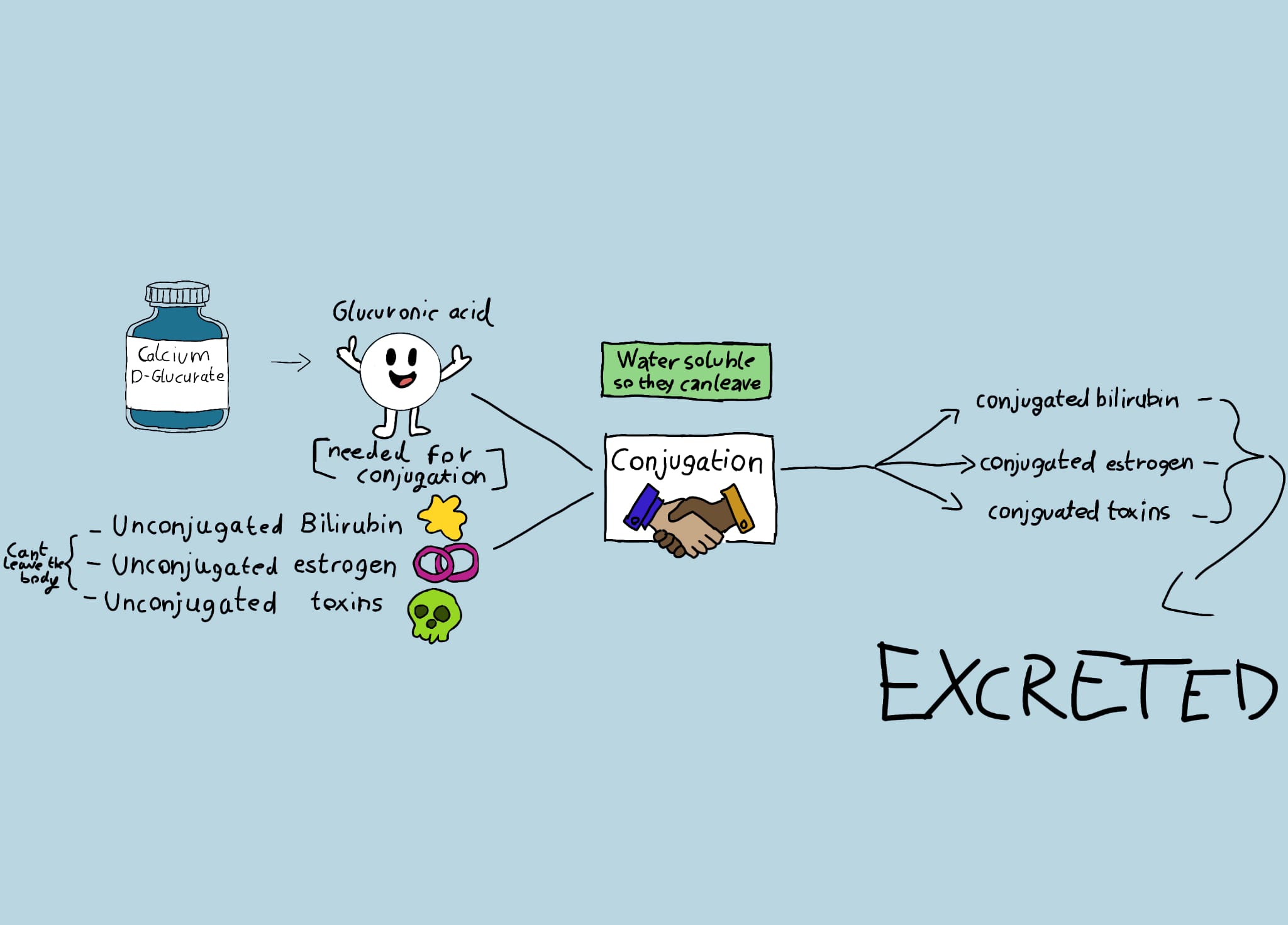
When taken as a supplement, Calcium D-Glucarate is converted in the body to D-glucaro-1,4-lactone, which plays a dual role in detoxification. First, it acts as a natural inhibitor of β-glucuronidase, preventing the enzyme from removing glucuronic acid tags from bilirubin, hormones, and toxins. This keeps already conjugated compounds intact and ready for elimination.
Second, D-glucaro-1,4-lactone can convert into glucuronic acid, the molecule your liver uses in glucuronidation to tag waste products, making them water-soluble and safe for excretion.
By both protecting existing conjugates and supplying the raw material for new glucuronidation, Calcium D-Glucarate helps ensure bilirubin, hormones, and toxins stay properly conjugated and are efficiently eliminated, supporting your body’s natural detoxification processe
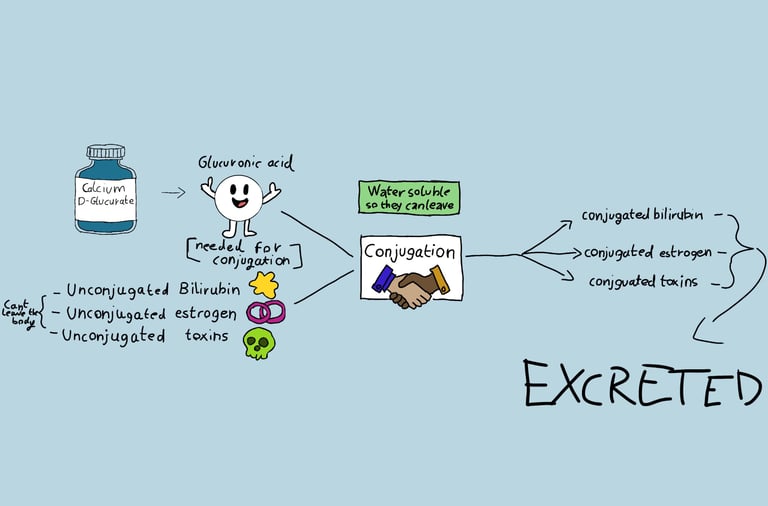
I understand that this might seem absolutely new and crazy for you so HOPEFULLY this diagram at the bottom can help! :p
Who may benefit from Calcium D-Glucurate
People who may benefit include those with:
Elevated bilirubin or bile metabolism issues (like Gilbert’s Syndrome)
Hormone imbalances
Exposure to toxins or certain medications
Anyone looking to support liver detox and waste clearance
Calcium D-glucarate may support detox, but it is not a substitute for medical care. Consult a healthcare professional before starting any new supplement.