


Gilberts And Histamine
In This Blog Post we discuss how histamine, mast cells, and estrogen may interact in Gilbert’s syndrome and contribute to allergy-like symptoms.
SYMPTOMS
3/28/20265 min read
Gilberts Syndrome and Histamine
Gilberts Syndrome and Histamine
Histamine: The missing Link
Today I want to talk about histamine — and why it may play a much bigger role in Gilbert's syndrome than most people realise.
This is something that doesn’t get discussed often, but once you understand it, a lot of “random” symptoms start to make sense.
What Is Histamine?
Histamine is a naturally occurring chemical in the body that plays an important role in:
Immune response
Digestion
Neurotransmission (brain signalling)
It is essential for survival — but the key point is this: Histamine is meant to be local, temporary, and tightly controlled
It is not supposed to build up or circulate in high amounts, and when it does well… it can cause some nasty symptoms.


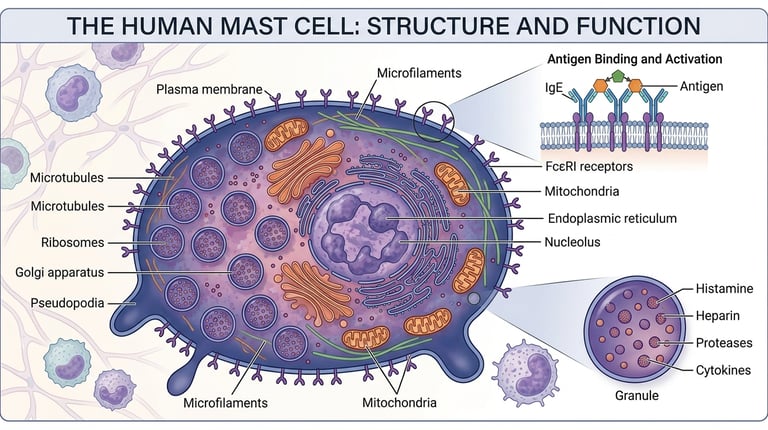
Mast cells: your body’s alarm system
Your body is covered in immune cells called mast cells. They act like an internal alarm system and play a major role in defense.
When triggered, mast cells release histamine and other chemicals to protect the body. This is exactly what happens in allergies: An allergen binds to receptors on mast cells → The mast cells activate → Histamine is released → Symptoms appear (itching, swelling, sneezing, etc.) But sometimes this system which is meant to protect you from danger, actually starts overreacting.
In some people — and importantly, not everyone with Gilbert’s syndrome — mast cells can become more reactive or “sensitive.”
This means they may release histamine more easily and in larger amounts [ Ill get into Who, Why, What in a second]
Gilbert’s syndrome, hormones, and histamine
One factor that may play a role is how the liver processes hormones. In Gilbert's syndrome, liver conjugation (the process of packaging substances for removal) can be less efficient. Specifically Glucuronidation. The liver is responsible for breaking down many compounds, including estrogen.
Because different substances rely on shared liver pathways, there can be competition in processing — especially between:
bilirubin
hormones like estrogen
This is one reason why some people with Gilbert’s syndrome may experience signs of Estrogen Dominance.
This blog post talks about estrogen, liver pathways and how conjugation works! [The packaging process]
Estrogen and mast cells
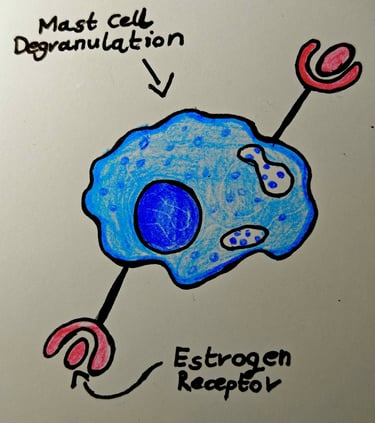
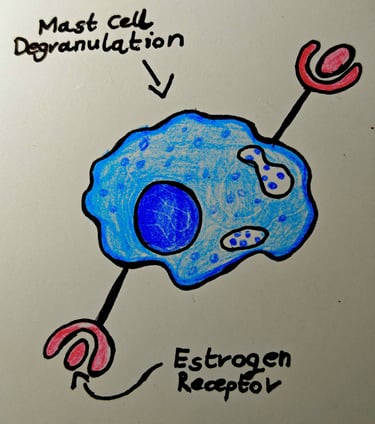
Mast cells have many tiny receptors that can be activated by different signals — not just allergens. When histamine is triggered by an allergen, that’s the classic allergy pathway. But here’s what’s less commonly discussed, Mast cells have many receptors, not just the allergen one, and one of these receptors is called the ERα receptor which reacts to estrogen. Estrogen can also influence mast cells. When estrogen levels are higher or less well regulated:
Mast cells can become more sensitive
They may release histamine more easily
The overall histamine load in the body can increase
This can lead to the feeling that your body is reacting to things that “never used to be a problem.” On top of that, When you have high histamine, it also stimulates estrogen production, which causes a viscous loop
DAO: your histamine “brake system
The body also produces an important enzyme called diamine oxidase, which helps break down histamine, especially from food. Think of DAO as your histamine “brake system.” When you eat something high in histamine, DAO helps prevent an excessive reaction. However, estrogen can reduce DAO activity, meaning:
Histamine is broken down less efficiently
Reactions last longer
Symptoms become more noticeable
Some foods have higher amounts of histamine, which adds even more histamine into a body that struggles to break it down. Examples of this are:
Aged Cheese
Fermented foods (kimchi, sauerkraut)
Alcohol (especially wine, beer)
Processed meats
And some foods stimulate your mast cells to release more histamine, Like
Chocolate
Strawberries
Tomatoes
Minerals, Vitamins and metals
Minerals play an important role in how stable or reactive mast cells are, but the key thing to understand is that it’s not just about having too much or too little — it’s about balance.
One of the most important minerals to talk about here is copper. Higher levels of estrogen can increase a protein called ceruloplasmin, which binds and transports copper in the blood. When this happens, total copper levels can rise. Under certain circumstances, this may contribute to increased oxidative stress and make mast cells more reactive, meaning they are more likely to release histamine. [Having adequate levels of copper is also really important for DAO to work]
That being said, copper is absolutely essential. Too little can cause issues, too much can also cause issues, and imbalances with other minerals can make things worse. The goal is proper regulation — not elimination.
Zinc plays a key role in maintaining that balance. A deficiency in zinc can make mast cells more sensitive and reduce the body’s ability to regulate inflammation. It also helps balance copper, so when zinc is low, copper can become relatively higher, which may further contribute to mast cell reactivity.
When you zoom out, this highlights a bigger picture: it’s not just one nutrient driving symptoms, but the balance between them. Supporting that balance is what helps keep mast cells more stable and less reactive.


Gilberts Syndrome, The Gut and Histamine.
Speaking from experience and studies, ive noticed that a lot of people with GS struggle with GI issues. Now ive yapped about this a ton on my page so ill also leave a link here, but people With Gilberts tend to have slower gastric emptying time. The gallbladder [Which is incredibly important for fats] can also struggle. This plays a hugggeee role on the microbiome and how things work. This is one of the few reasons why people with GIlberts Syndrome are more prone to SIBO [Small Intestinal bacterial Overgrowth]. The Intestines play a very big role on many things, including histamine and allergies.
Symptoms of Histamine Issues
Histamine issues can present in many ways, but here are some of the main symptoms:
Allergy like symptoms,
Headaches/migraines,
Hives and itchy sking
Facial Flushing
Diarrhea and bloationg
Nasal congestion [inflammation]
Fatigue
[And much more, going from eczema to things like low blood pressure, menstrual issues etc]
These symptoms often occur 30 minutes to a few hours after consumin somthing high in histamine.


Certain Microbiome changes can be more common in GS, because of these things, for example: treptococci, Bacteroides, Escherichia, Lactobacillus, Klebsiella and more. All of these if imbalanced can cause more histamine being added into your body. If you have a leaky gut it can cause a lot of havoc. The intestinal lining is incredibly important for DAO production. Leaky gut allows undigested particles to enter the blood stream which causes the immune system to activate mast cells in the gut realisng EVEN more histamine