

HCL
HCl (Hydrochloric Acid) is a digestive supplement commonly used to support healthy stomach acid levels and improve the breakdown and absorption of nutrients, especially proteins and minerals. Adequate stomach acid plays a key role in overall digestion and gut health. For individuals with conditions like Gilbert’s Syndrome, supporting efficient digestion may be especially important, as optimal nutrient absorption can help reduce digestive stress on the body.
SUPPLEMENTS
10/18/20255 min read
HCL
HCL
What is HCL?
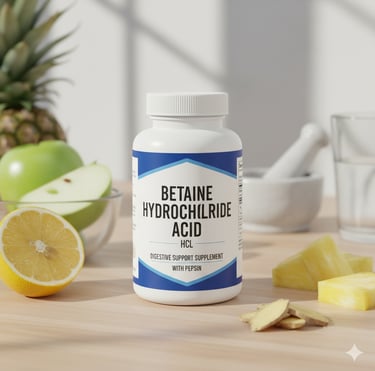
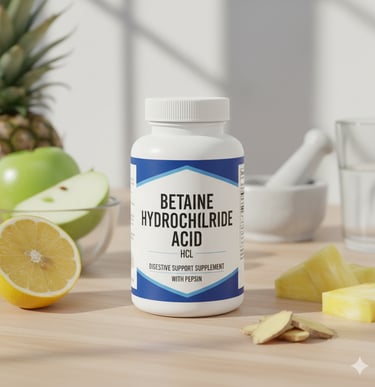
Betaine HCl (Betaine Hydrochloride) is a supplement that serves as a digestive aid. It provides hydrochloric acid, which the body uses in many digestive processes. In supplements, it usually comes paired with pepsin, a digestive enzyme.
Why it’s Especially Important in Gilbert’s Syndrome
According to clinical studies, people with GS have slightly slower stomachs so having enough stomach acid is really important!
Digestive Signaling — How HCl Starts the Whole Process-
Hydrochloric acid (HCl) isn’t just there to “dissolve food” — it’s the spark that starts your entire digestive sequence.
When you eat, your stomach mixes food with acid to form a thick liquid called chyme. That acidity does two essential things:
Activates digestive enzymes – HCl converts pepsinogen into pepsin, the enzyme that breaks proteins into smaller peptides. Without enough acid, pepsin can’t activate, and protein digestion stalls right from the start.
Triggers communication with the rest of your gut – The acidity of chyme signals your small intestine to release hormones like secretin and CCK (cholecystokinin).
Secretin tells the pancreas to release bicarbonate and digestive enzymes.
CCK signals the gallbladder to release bile for fat digestion.
If stomach acid is too low, this messaging system weakens. The pancreas and gallbladder don’t get the memo, enzymes and bile are released sluggishly, and food lingers in the stomach longer than it should.
Mineral and Vitamin Absorption
Having healthy stomach acid is especially important for absorbing key vitamins and minerals — and many people don’t realize how tightly connected digestion and nutrition really are.
When you eat, stomach acid and the enzyme pepsin help break food proteins apart. This step is what frees vitamin B12 from the food you eat. Without enough acid or pepsin, B12 stays trapped in those proteins, and your body simply can’t absorb it later in the small intestine.
The same story plays out for other nutrients too:
Iron needs acid to change into a form your body can absorb.
Calcium and magnesium dissolve best in an acidic environment, which helps with bone strength, muscle function, and energy.
Zinc also depends on stomach acid — and ironically, zinc itself is needed to make stomach acid, creating a feedback loop.
When acid is low, you can eat all the right foods but still miss out on the nutrients inside them.
Symptoms of Low Stomach Acid
Low stomach acid can look and feel like a lot of other digestive issues, which is why it often goes unnoticed — or even mistaken for too much acid. But these are some of the most common signs that your stomach might not be acidic enough to do its job properly:
Bloating and indigestion – especially after high-protein meals. Food ferments instead of digesting, creating gas and pressure.
Seeing undigested food in your stool – a sign that proteins and fibers aren’t breaking down fully.
Abdominal discomfort or heaviness after eating – meals “sit” in the stomach longer because acid isn’t triggering proper emptying.
Feeling weirdly full after small meals – even when you haven’t eaten much.
Poor appetite or nausea – slow digestion can reduce hunger signals.
Constipation – weak stomach acid means slower motility all the way down the digestive tract.
Reflux or heartburn – paradoxically, low acid can cause reflux by allowing food and gas to build pressure that pushes stomach contents upward.
If several of these sound familiar, your stomach might not be producing enough acid to keep digestion moving efficiently — especially if you already tend to have slower gastric emptying, as is often the case in Gilbert’s Syndrome
Acid Reflux and Low Stomach Acid [ the paradox]
Most people assume reflux means there’s too much acid, but in many cases, the opposite is true. Low stomach acid can actually cause reflux.
When stomach acid is weak, food isn’t digested efficiently and stays in the stomach longer than it should. As it lingers, it starts to ferment, creating gas and pressure that push upward against the lower esophageal sphincter (LES) — the small valve separating the stomach from the esophagus.
That pressure can force even small amounts of acid upward, creating the burning feeling we call “heartburn.”
To make things worse, SIBO (small intestinal bacterial overgrowth) can also produce large amounts of gas in the upper digestive tract. This gas adds even more pressure from below, leading to burping, bloating, and reflux, especially after eating. Low stomach acid and SIBO often go hand in hand — because stomach acid normally helps prevent bacteria from overgrowing in the small intestine.
Ironically, many people are prescribed antacids or PPIs (proton pump inhibitors) for reflux without ever having their stomach acid levels tested. While these medications can bring short-term relief, they further suppress acid, slowing digestion and making gas and pressure worse over time.
Long-term acid suppression can also weaken the upper esophageal sphincter (UES) — the muscle higher up that’s meant to stay tightly closed. When both sphincters relax or weaken, acid and gas can travel all the way up into the throat, causing “silent reflux” (LPR) — things like coughing, hoarseness, post-nasal drip, or a lump-in-the-throat sensation.
So even though reflux feels like “too much acid,” it’s often a sign of too little acid and too much pressure in the upper digestive tract — sometimes made worse by SIBO, slow motility, or poor bile flow (which can all occur in people with Gilbert’s Syndrome).
Gut Bacteria and Immunity — SIBO, H. pylori, and Low Stomach Acid
Your stomach acid isn’t just for digesting food — it’s one of your first lines of defense against harmful bacteria. When acid is low, bacteria that normally stay in the colon or lower gut can overgrow in the small intestine. This is called Small Intestinal Bacterial Overgrowth (SIBO).
Clinical studies show that low stomach acid or long-term use of acid-suppressing medications like PPIs significantly increases the risk of SIBO. For example:
One meta-analysis found people infected with H. pylori (which damages acid-producing cells) had 1.8 times higher odds of developing SIBO.
Other studies have identified specific bacteria that flourish in this low-acid environment, including E. coli, Klebsiella, and Streptococcus, which are known for producing gas and fermenting food in the small intestine.
Patients with SIBO often show decreased microbial diversity in the small intestine, favoring gas-producing and fermentative microbes, which contributes to bloating, burping, and digestive discomfort.
This bacterial overgrowth doesn’t just cause digestive symptoms — it also impacts nutrient absorption and can weaken the immune system. Low stomach acid reduces your body’s ability to kill pathogens, so harmful bacteria can survive and even travel further down the digestive tract.
Who Should Be Careful With Taking HCl
HCl supplements can help digestion, but they’re not safe for everyone. Avoid or be cautious if you have:
Stomach ulcers or gastritis
Severe reflux, hiatal hernia, or Barrett’s esophagus
Kidney disease
Currently taking acid-suppressing medications (PPIs or H2 blockers)
Safety tip: Always start under guidance, and stop immediately if you feel any burning or discomfort. Testing stomach acid first is the safest way to know if supplementation is right for you.