

TUDCA
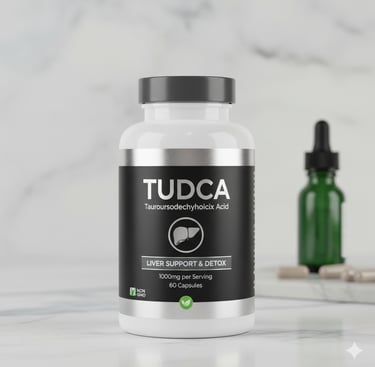
TUDCA stands for Tauroursodeoxycholic Acid. It's a bile acid - specifically, a water-soluble bile acid that occurs naturally in small amounts in the human body. To hep you understand how TUDCA supports your body, you need to know about bile
SUPPLEMENTS
10/4/20253 min read
TUDCA
What is TUDCA?
TUDCA stands for Tauroursodeoxycholic Acid. It's a bile acid - specifically, a water-soluble bile acid that occurs naturally in small amounts in the human body.
To hep you understand how TUDCA supports your body, you need to know about bile
What is bile?
Bile is a greenish-yellow to golden-brown liquid produced by your liver. It’s both a digestive fluid AND a waste disposal system. Think of it as serving two jobs:
Digestive helper – emulsifies fats so digestive enzymes can break them down, and also helps your body absorb fat-soluble vitamins (A, D, E, K)
Garbage truck – carries waste products (like bilirubin and cholesterol) out of your body



Bile gets its characteristic color from bilirubin! [Yes, the thing everyone with GS has higher-than-normal levels of XDD]
But bile isn’t just for digestion—it’s also a messenger. Bile acids, including TUDCA, act like signaling molecules that communicate with your body. They can:
Activate receptors like FXR and TGR5 to regulate liver function and metabolism
Help the liver balance cholesterol and bile production, and protect liver cells from stress
Influence glucose and fat metabolism
Affect gut health and gut hormones, which can impact appetite, digestion, and beneficial bacteria
It’s also normal for bile composition and flow to vary depending on diet, fasting, hormones, and hydration, which is part of why some people notice digestive changes at certain times—and why TUDCA can help support healthy bile flow.
Why TUDCA could help people with Gilberts Syndrome
Some people with Gilberts Syndrome experience bile sludge , which happens when bile becomes thick and sluggish. This can occur if the balance of bile ingredients—cholesterol, bilirubin, bile acids, and salts—is off. Thick bile can make digestion harder and slightly increase the risk of pigment stones (a type of gallstone linked to higher bilirubin levels).
TUDCA may help in a few ways:
Improves bile flow – supports bile secretion, which can make it less thick and reduce the risk of sludge or stones
Supports liver cells – protects liver cells from stress, helping the liver handle bilirubin better during fasting, illness, or other stressors
Cell-protective effects – while not a classic antioxidant, TUDCA helps prevent damage inside liver cells and bile ducts
Supports gut balance – early research suggests TUDCA may help maintain a healthier gut environment, indirectly supporting beneficial bacteria like Bifidobacterium and Lactobacillus
Factors That Can Slow Bile
Imbalance of bile ingredients – if cholesterol, bilirubin, or bile acids are too high or too low.
High estrogen levels – estrogen can increase cholesterol in bile, which may thicken it and raise gallstone risk.
High cholesterol – too much cholesterol can make bile more viscous


Signs Bile Might Not Be Flowing Well
When bile isn’t flowing properly, it can affect digestion and health. Some signs to watch for include:
Discomfort or pressure under the right ribs (where your liver and gallbladder sit)
Difficulty digesting fatty foods (greasy meals may feel heavy or cause nausea)
Changes in stool color or consistency (such as pale, clay-colored, or sometimes diarrhea)
Poor absorption of fat-soluble vitamins (A, D, E, K), which can affect energy, immunity, and skin health
Gut issues like bloating, gas, or indigestion
Who May Benefit from TUDCA?
TUDCA may be helpful for people who want to support liver health, improve bile flow, or reduce stress on liver cells. This includes:
Individuals with Gilbert’s Syndrome
People prone to bile sludge or pigment stones
Some people use it as general liver support, though research is strongest in cases of impaired bile flow
TUDCA is generally considered safe for adults, but it’s always best to check with a healthcare professional before starting any supplement—especially if you are pregnant, breastfeeding, or taking other medications.